
Google Ads for Therapists: The Ultimate Guide to Getting Clients

If you’re a therapist trying to grow your practice, you’ve probably heard that Google Ads can help you attract more clients. But figuring out how to use it effectively can feel overwhelming. Keywords, targeting, bidding strategies, landing pages—there are a lot of moving parts.
The good news is that Google Ads works extremely well for therapists when it’s set up correctly. Every day, thousands of people search for help with anxiety, depression, trauma, couples therapy, and other mental health services. If your practice appears at the top of those searches, you can connect with people who are actively looking for support.
In this guide, I’ll walk you through everything you need to know about Google Ads for therapists—from how the platform works to campaign setup, keyword strategy, compliance considerations, and cost expectations.
This is the same framework we use at TradeScale when building Google Ads campaigns for healthcare professionals.
Want to grow your client list now? Reach out and we’ll start sending qualified leads your way asap.
Why Google Ads Work So Well for Therapists
The biggest advantage of Google Ads is intent.
Unlike social media advertising—where users are scrolling passively—Google Ads shows your practice to people who are actively searching for help.
Examples of searches we see frequently:
therapist near me
EMDR therapist
couples counseling near me
wilderness therapist
online therapy for depression
These searches represent high-intent potential clients.
Someone typing “therapist near me” is usually looking to book an appointment soon.
Google Ads allows you to place your practice at the very top of these searches.
For therapists, that means:
predictable new client inquiries
immediate visibility in your city
measurable return on investment
How Google Ads for Therapists Works
Google Ads operates on a pay-per-click (PPC) model.
You bid on keywords related to therapy services, and your ad appears when someone searches those terms.
You only pay when someone clicks your ad.
A typical ad might look like this:
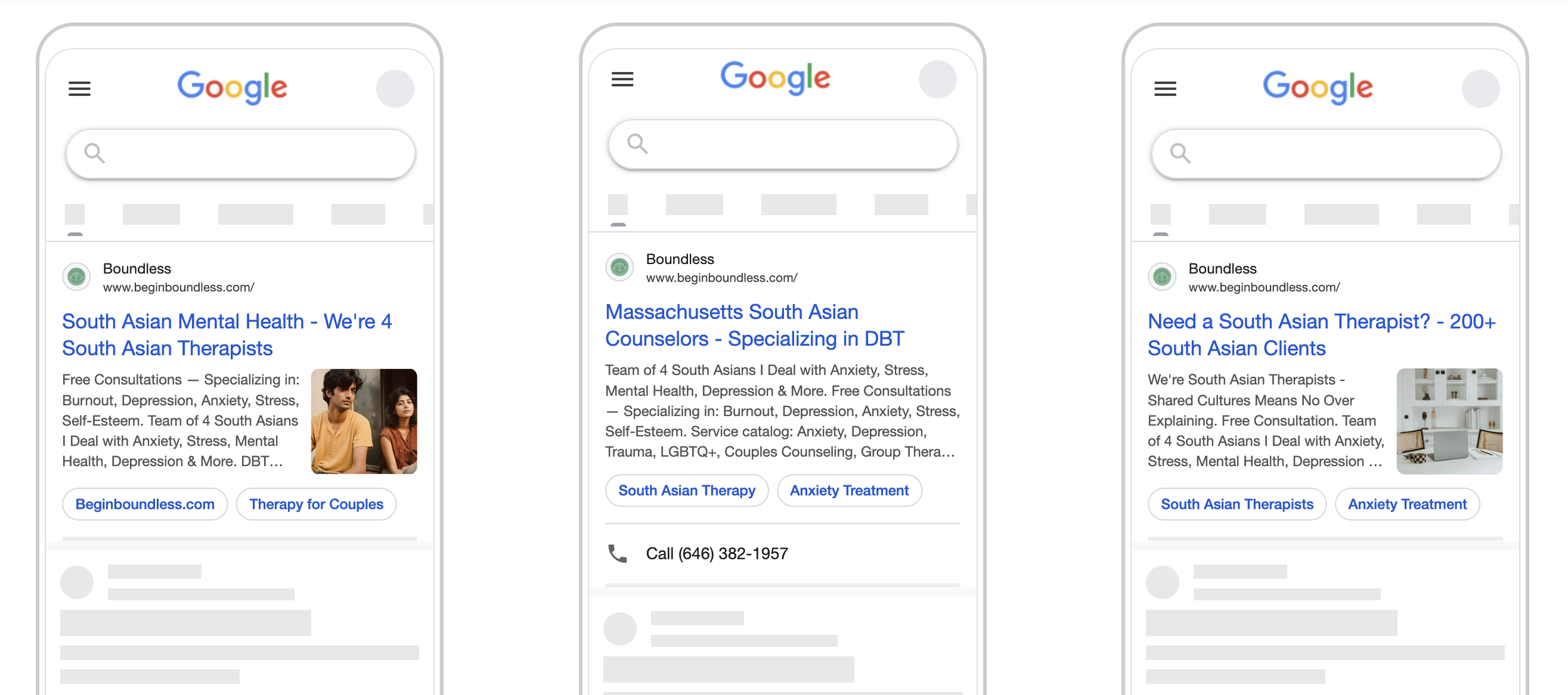
When someone clicks the ad, they land on a dedicated page designed to convert them into a client.
Average Cost of Google Ads for Therapists
Costs vary depending on location and competition.
Typical ranges we see:
Competitive markets like New York or Los Angeles tend to have higher costs due to competition, while smaller markets are usually cheaper.
The good news is that therapy clients often have high lifetime value, so acquiring new clients through ads can be extremely profitable. Our clients typically have a customer LTV of $3,000-$5,000+.
Best Keywords for Google Ads for Therapists
Keyword selection is the foundation of a successful campaign.
You want to focus on high-intent searches—people actively looking for therapy.
Examples of strong keywords:
General Therapy Searches
therapist near me
counseling near me
licensed therapist near me
therapy services near me
Condition-Specific Searches
anxiety therapist
depression therapy
EMDR therapist
ptsd therapist
Relationship Therapy
couples counseling
marriage therapist
relationship counseling near me
Local Keywords
therapist in [city]
counseling in [city]
Avoid middle or high funnel informational keywords like:
what is therapy
symptoms of anxiety
psychology definitions
Those searches are usually research, not client intent.
Campaign Structure for Therapy Practices
One of the biggest mistakes I see therapists make is running one generic campaign for everything.
Instead, structure campaigns around specific services.
Example structure:
Campaign 1 — Couples Therapy
Example keywords:
couples therapist near me
couples counseling near me
Campaign 2 — Anxiety Therapy
Example keywords:
anxiety therapist
anxiety counseling near me
Campaign 3 — EMDR Therapy
Example keywords:
EMDR counseling
EMDR therapist near me
Campaign 4 — Trauma / PTSD Therapy
Example keywords:
trauma therapist
PTSD therapist near me
This structure allows you to:
write more relevant ads
improve quality score
lower cost per click
increase conversion rates
How Location Targeting Works for Therapists
Therapy is usually local, either in your specific city of state. Most therapists are only licensed in their respective states which limits where they can practice.
Your ads should only appear within the geographic area you serve.
Typical targeting setup:
10–20 mile radius around your office
city targeting
metro-area targeting
state-wide targeting
If you offer telehealth therapy, you can expand targeting statewide or across multiple states where you're licensed.
Writing High-Converting Ads for Therapy Services
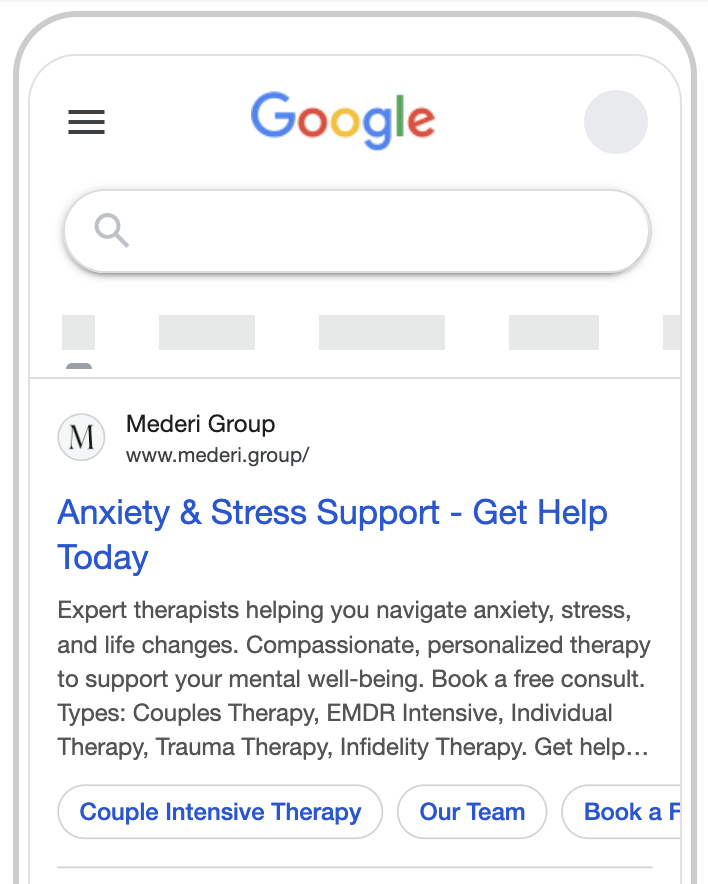
Ad copy should focus on trust, specialization, and accessibility.
People searching for therapy are often in a vulnerable state, so the tone should be supportive and reassuring.
Key elements to include:
1. Specialization
Mention the specific service.
Examples:
Anxiety Therapy
Trauma Counseling
Couples Therapy
2. Credentials
Build trust.
Examples:
Licensed Therapist
Evidence-Based Treatment
10+ Years Experience
300+ 5 Star Reviews
3. Convenience
Reduce friction.
Examples:
Virtual Appointments Available
Evening Availability
Accepting New Clients
Example Ad
Landing Pages That Convert Therapy Clients
One of the most overlooked parts of Google Ads for therapists is the landing page.
Sending traffic to a generic homepage usually reduces conversions.
Instead, use dedicated pages for each therapy service.
Example:
/anxiety-therapy
/couples-counseling
/emdr-therapy
Each page should include:
clear headline
therapist credentials
therapy approach
what clients can expect
testimonials (if allowed)
contact form
phone number
easy appointment booking
The goal is to make it as easy as possible for a client to reach out.
HIPAA and Privacy Considerations
Healthcare advertising requires extra care.
Best practices include:
avoid collecting sensitive health information in forms
use HIPAA-compliant contact methods
avoid remarketing lists based on medical conditions
keep messaging supportive rather than diagnostic
Google also restricts certain healthcare targeting practices, so campaigns need to be set up carefully.
Conversion Tracking for Therapy Ads
Without conversion tracking, you’re flying blind.
Track key actions like:
contact form submissions
appointment bookings
phone calls
consultation button clicks
This data allows Google’s algorithm to optimize for real leads, not just clicks.
Common Mistakes Therapists Make With Google Ads
After auditing hundreds of campaigns, these are the biggest issues I see.
Running Broad Keywords
Too many irrelevant searches.
Sending Traffic to the Homepage
Lower conversion rates.
No Negative Keywords
Wasted ad spend on irrelevant searches.
Poor Location Targeting
Ads showing outside your service area.
No Conversion Tracking
No optimization data.
Fixing these issues alone can cut cost per lead dramatically.
Should Therapists Manage Google Ads Themselves?
Some therapists run their own ads successfully. But many eventually choose to work with a specialist because:
they’re busy running their practice
keyword optimization takes time
campaign management requires ongoing adjustments
performance data needs interpretation
A properly managed campaign can significantly increase client inquiries while reducing wasted spend.
Final Thoughts on Google Ads for Therapists
For therapy practices looking to grow, Google Ads is one of the most powerful marketing channels available.
It allows you to connect with people who are actively searching for help at the exact moment they need it.
When campaigns are structured correctly—with the right keywords, targeting, and landing pages—Google Ads can generate consistent new client inquiries every month.
The key is building campaigns strategically rather than simply turning ads on and hoping for the best.
Need Help With Google Ads for Your Therapy Practice?
At TradeScale, we specialize in Google Ads management for healthcare professionals and service businesses.
We build campaigns designed to:
attract high-intent therapy clients
reduce wasted ad spend
generate consistent inquiries
If you're considering running Google Ads for your practice and want expert guidance, we’d be happy to help.